Home › Brick Retaining Walls
Superior Masonry St Louis designs and builds brick retaining walls for homeowners in St Louis, MO. Our walls control soil and grade while adding a finished look to your yard. We focus on proper footings, drainage, and brick layout so your brick retaining walls stay straight and stable over time.
Superior Masonry St. Louis provides professional brick retaining walls throughout St Louis, MO, Missouri and the surrounding area. Our licensed, insured crew delivers safe, clean, on-time work with a free estimate before anything begins. Call (314) 597-1728 or request your free quote.
Brick Retaining Walls Built for St. Louis Hills and Weather
Brick retaining walls are not just decoration. In St. Louis they often hold back soil on sloped yards, keep driveways from washing out, and protect foundations from shifting clay. At Superior Masonry St. Louis, we build brick retaining walls that are meant to stay straight and solid through our freeze-thaw cycles, heavy spring rains, and hot summers.
Most of our brick retaining wall projects start with a simple walk-through of your property. We look at how the yard slopes, where water currently runs after a storm, and how close we are to house foundations, sidewalks, or neighboring fences. In many older St. Louis neighborhoods, like South City or the inner ring suburbs, lots are tight and elevations change quickly, so a wall that looks small on paper can be holding back a surprising amount of soil. That affects how we design and reinforce it.
We also talk honestly about whether a true structural retaining wall is needed or if your situation only calls for a low garden wall. A 30-inch decorative brick garden edge is a very different project than a 5-foot wall that supports a driveway or parking pad. When a wall reaches certain heights, or if it will support vehicle loads, we may recommend involving an engineer or following specific local building guidelines so the wall passes code and stays safe for the long term.
Our goal on this page is to give you a clear idea of how we actually build brick retaining walls in St. Louis, what affects the price, and what you should look out for before hiring any contractor, including us.
How We Design and Build a Brick Retaining Wall That Lasts
A solid brick retaining wall starts with the part you do not see: the foundation and drainage. For most residential projects in St. Louis, we excavate to undisturbed soil, remove soft topsoil, and pour a reinforced concrete footing that is sized according to the wall height and soil conditions. Clay soils common in this area can swell and shrink, so we do not skip rebar in the footing for walls that hold real loads.
On top of the footing, we usually build a structural backup wall using concrete masonry units (CMU) or poured concrete, then face it with brick. The brick you see is the finished surface, but the block behind it is doing much of the structural work. This type of construction gives you the classic brick look with the strength of a reinforced wall. For lighter-duty or low garden walls, we sometimes build solid brick with specific bonding patterns, but we make that call after assessing what the wall has to hold.
Drainage is critical. Every retaining wall we build includes a perforated drain pipe along the base of the wall on the soil side, sloped to daylight or a suitable outlet. We backfill with clean gravel behind the wall and separate that gravel from the native clay using filter fabric. This keeps fine soils from clogging the stone and pipe. Without that system, hydrostatic pressure from trapped water will push on the wall, especially during our wet springs, which is how many older brick walls in St. Louis end up leaning.
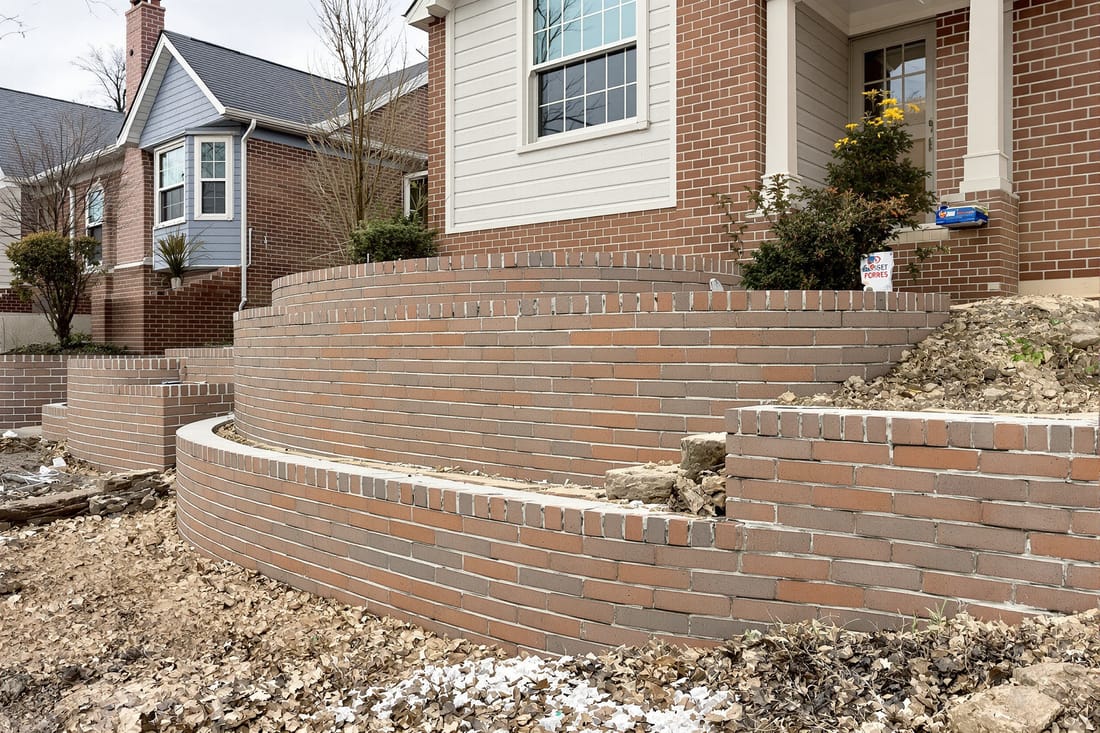
For walls that step up or turn corners to follow the contours of a yard, we plan the layout carefully before the first shovel hits the ground. We mark height changes, set string lines, and adjust step-ups in full brick or half-brick increments so the finished brick courses line up cleanly. That planning avoids the patchwork look you sometimes see on rushed jobs and makes repairs years down the road easier, because the pattern is consistent and logical.
Brick Options, Style Choices, and Matching Older St. Louis Homes
One of the big advantages of brick retaining walls is that they can be made to blend in with almost any St. Louis home style, from older red brick bungalows to newer mixed-material houses. At Superior Masonry St. Louis, we usually start by looking at the brick on your house, garage, or existing landscape walls, then pull sample boards to get as close a match as possible.
For many city blocks with 80 to 100-year-old brick, the exact brick may not be made anymore. In those cases, we mix two or three modern brick lines to mimic the variation in color and texture you see on older masonry. We can also use reclaimed brick where appropriate, especially on shorter garden walls where structural loads are lighter, though we always check the quality of the reclaimed brick before using it on anything that holds back a lot of soil.
You can choose between different wall caps and finishes. Some clients like a soldier course (bricks standing on edge in a row) for the top of the wall, while others prefer a precast concrete cap that creates a smooth seat. For steps integrated into the wall, we may switch to solid treads or stone caps that stand up better to foot traffic and winter salt. Mortar color choices also make a big difference. A darker mortar can hide dirt and salt staining near driveways, while a lighter mortar can help a wall stand out as a design feature in a shaded backyard.
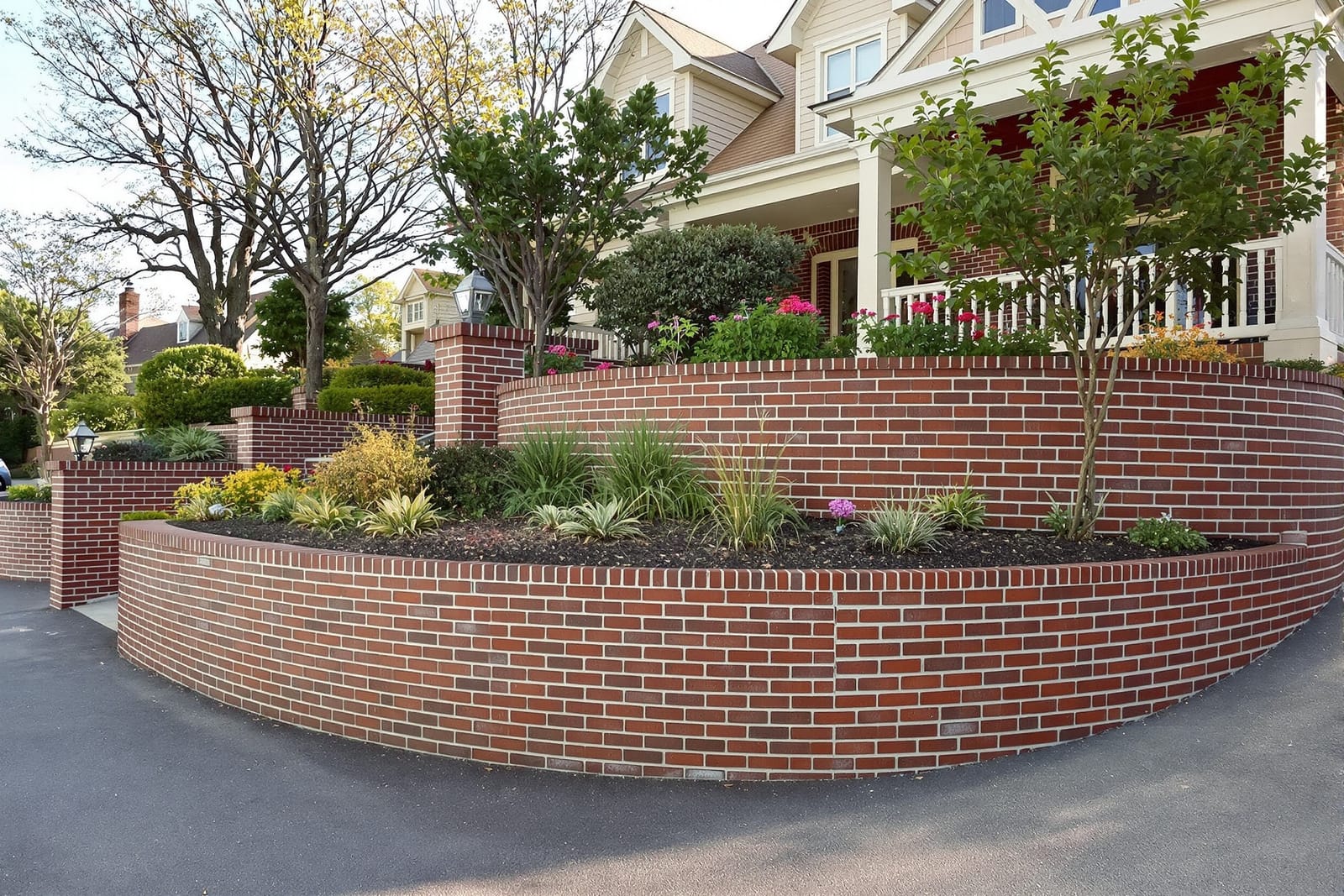
We also consider how the wall will look in winter when plants die back. On steeper yards in places like Kirkwood or Webster Groves, we often break a tall wall into two or three shorter tiers with planting beds between them. These terraced brick retaining walls reduce the loading on each section and create easier spots for shrubs, small trees, or groundcover that hold soil and soften the look year-round.
Costs, Permits, and Timing Brick Retaining Wall Work in St. Louis
What a brick retaining wall costs in St. Louis depends mostly on wall height, length, access to the work area, and what the wall is supporting. A short, easily accessed garden wall along a front sidewalk is one price point. A taller wall that holds back a driveway and needs a deeper footing, more rebar, and more complicated drainage is another. If we have to move soil by hand from a tight backyard or work around existing utilities, that can also add labor.
During our estimate, Superior Masonry St. Louis breaks down the main cost drivers so you can see where your money is going. You will usually see line items that cover excavation and hauling, concrete footing, block backup wall, brick facing, caps and steps, drain pipe and gravel backfill, and site restoration. We do not hide structural items in vague descriptions, because those are the parts that keep your wall standing long term.
Depending on the height and location of the wall, the city or county may require a permit. For example, many jurisdictions around St. Louis set a maximum wall height before engineering or permits become mandatory, especially near property lines or sidewalks. We help you understand what your municipality requires, and we can provide drawings or connect with an engineer when needed. Doing it correctly the first time avoids problems if you sell your home or if an inspector sees the wall later.
In terms of timing, brick retaining wall projects in St. Louis usually work best from early spring through late fall. We avoid pouring footings or laying brick when the temperatures are consistently below freezing, because that can weaken the concrete or mortar. Late winter and early spring bookings fill quickly, since many homeowners want walls in place before heavy spring storms. If you have a failing wall that is already leaning or cracked, it is wise to schedule an evaluation before winter, when freeze-thaw cycles can make existing damage worse.
Common Brick Retaining Wall Problems and How We Fix or Prevent Them
Many of the brick retaining walls we are called to look at in St. Louis were originally built without adequate footing or drainage. Typical signs of trouble include a wall that leans outward, stepped cracking that follows mortar joints, bulges in the middle of a span, or bricks that are spalling (surface flaking) because water is trapped behind the wall. Driveways or patios settling near the top of a wall can also signal that the structure is not doing its job.
When we evaluate an existing wall, we do more than just look at the face. We check the grade above and below, look for visible weep holes or drain outlets, and in some cases dig small test spots along the base to see what kind of footing, if any, was installed. If the wall is only showing early signs of stress, we might be able to relieve pressure with improved drainage and localized rebuilding. But if the wall is badly leaning or has lost structural integrity, the safest long-term solution is often to remove it and rebuild properly with a reinforced design.
To prevent these failures on new walls, Superior Masonry St. Louis always allows somewhere for water to go. Weep holes, drain pipes, and correct backfill materials are non-negotiable. Where runoff from roofs or neighboring yards adds extra water load, we may recommend tying in downspouts, adding surface drains at the top of the wall, or regrading certain areas so that water does not constantly collect behind the wall.
We also talk with you about maintenance. Brick retaining walls are not high maintenance, but they do benefit from occasional inspections, especially after heavy storms or major freezes. Keeping the top of the wall clear of mulch piled against the face, making sure drain outlets are not blocked by leaves, and avoiding planting large trees right next to the wall all help it last longer. If minor cracks appear, addressing them early is usually far less expensive than waiting until movement becomes visible from the street.