Home › Concrete and Block Masonry
Superior Masonry St Louis offers concrete and block masonry services for homes in St Louis, MO. We build and repair concrete block walls, foundation walls, and structural partitions. Our crew focuses on proper reinforcement, plumb walls, and smooth finishes suitable for waterproofing or veneers.
Superior Masonry St. Louis provides professional block masonry throughout St Louis, MO, Missouri and the surrounding area. Our licensed, insured crew delivers safe, clean, on-time work with a free estimate before anything begins. Call (314) 597-1728 or request your free quote.
Concrete and Block Masonry for St. Louis Homes and Businesses
Concrete and block masonry is the backbone of a lot of St. Louis structures, from basement walls in older South City homes to loading docks and dumpster enclosures in newer commercial properties. Superior Masonry St. Louis focuses on getting these basics right, because if the block work and concrete are not solid and straight, nothing that comes after will last.
Most of the block masonry we do involves concrete masonry units (CMU) for foundation walls, retaining walls, garages, and additions. We look at soil conditions, drainage, and how the structure will be used before we give you a price. In many neighborhoods around St. Louis, like Maplewood and Overland, we see clay soils that hold water. That affects the footing size, reinforcement, and whether we recommend waterproofing or a simple damp-proof coating on the block.
Concrete work that ties into block masonry includes footings, slabs, piers, and sometimes structural beams. For example, if you are adding a block garage, we place and finish the concrete footing, lay the block walls, and then pour the slab inside so everything works together. This one-contractor approach keeps responsibility in one place and avoids the finger pointing that happens when separate crews handle different parts.
We also pay close attention to how new concrete and block tie into old brick and stone, which is common around St. Louis. Many older homes have brick foundations with later block repairs. We use proper anchors, compatible mortars, and transition details so the new work does not pull away, crack, or create moisture traps where salt and freeze-thaw can cause damage.
How We Build Block Walls and Concrete Work, Step by Step
Our process for block masonry and concrete in St. Louis starts with layout. We snap lines and establish elevations with a laser so the footings and courses of block line up with existing floors, doors, and siding. On sloped city lots, especially around south and west St. Louis County, we sometimes step the footings or vary block course heights so the wall looks level from the street and still drains correctly.
For footings, we excavate to the depth required by local code and soil conditions, then set forms or trench form for continuous pours. We place reinforcement steel (rebar) as needed, using chairs or stakes to keep it off the bottom of the trench. Once inspected, we pour concrete at the proper slump so it flows around the rebar but does not separate. After curing starts, we check for any honeycombing or soft spots and address them before laying block.
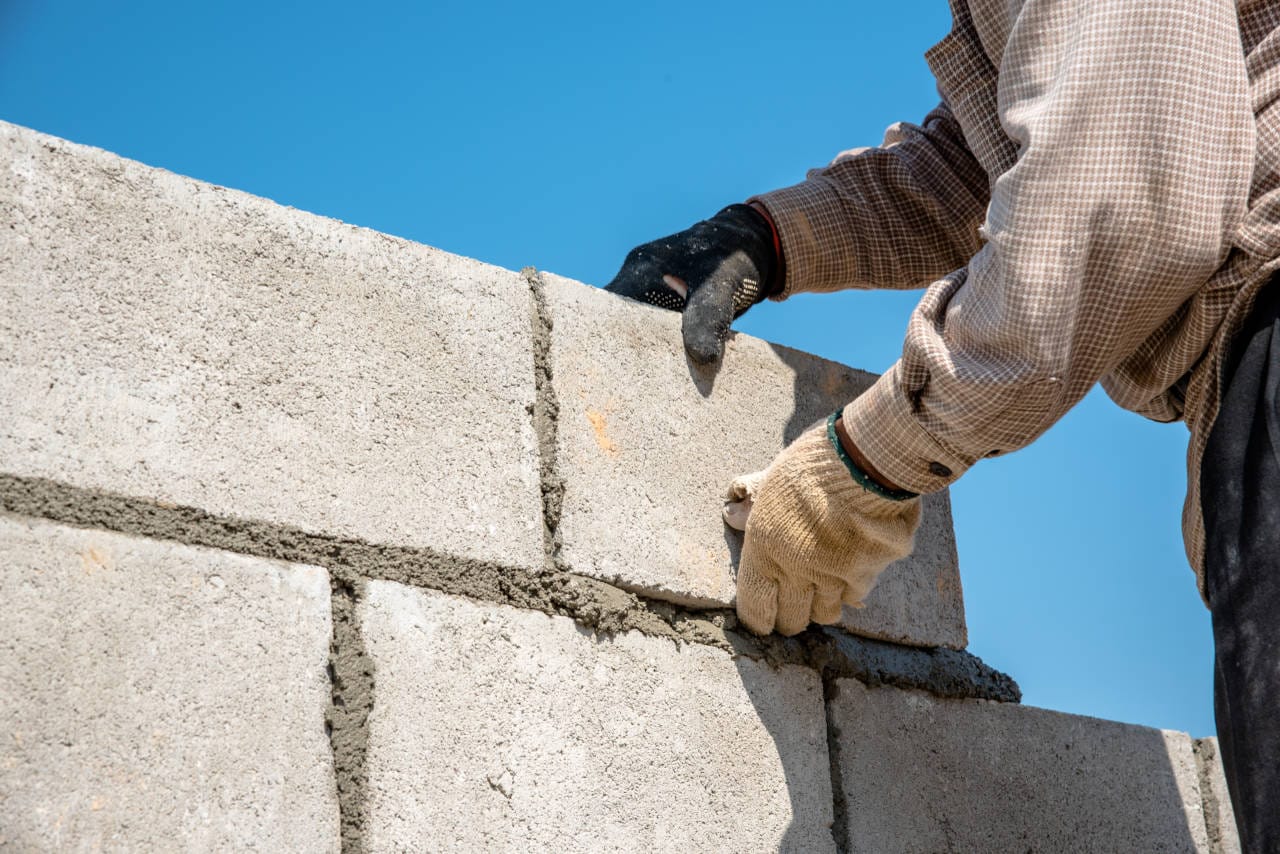
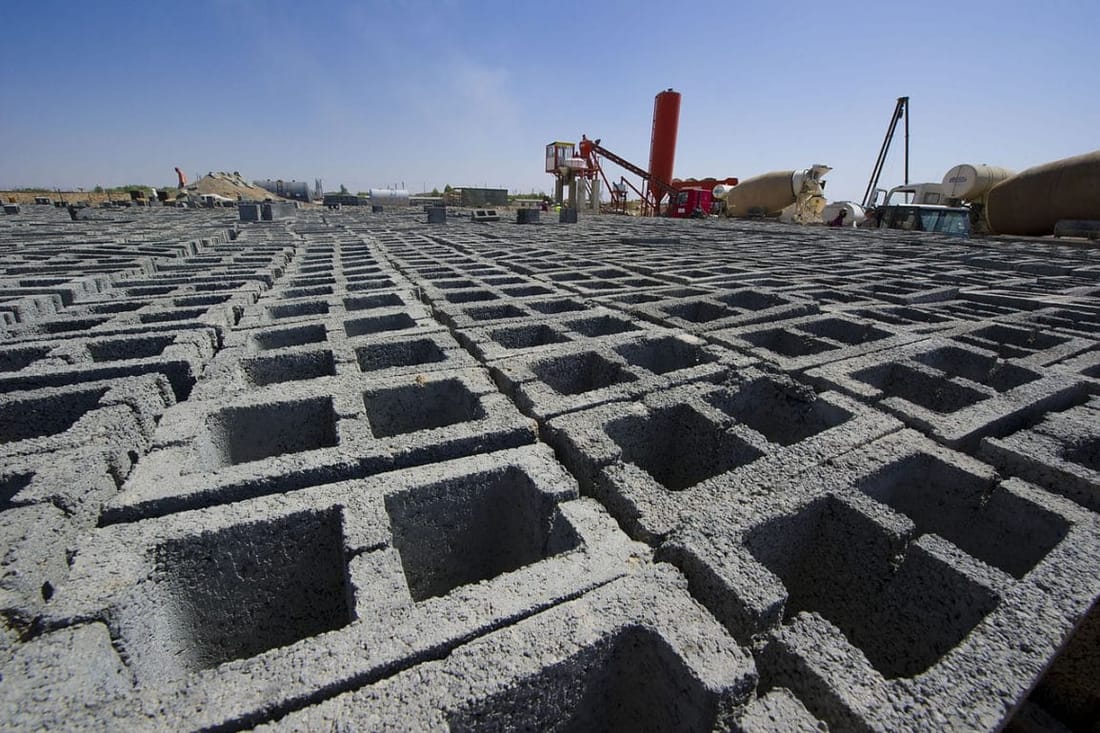
For the block work itself, we use either standard hollow CMU, solid blocks, or specialty units like bond beam blocks and lintel blocks. Mortar type and joint profile are chosen to match the structure and exposure. Exterior retaining walls that face road splash or deicing salts get stronger mortar and tooled joints that shed water. Interior basement partitions might get a simpler finish but still need full head and bed joints for structural strength.
As we stack courses, we keep walls plumb and level by stringing lines and checking with a level on every course. Rebar is run vertically through cells at intervals that meet the design and then filled with grout where required. Openings for doors, windows, or vents get lintel blocks with rebar and concrete infill so the loads are carried correctly. Once the wall reaches height, we often cap it with a solid course or a poured bond beam for added rigidity.
On the concrete side, slabs are placed over compacted base rock, with vapor barriers and reinforcement as needed. In garages and basements, we cut control joints soon after finishing to manage cracking. Around St. Louis, freeze-thaw is a constant issue, so for exterior work we recommend air-entrained concrete and proper slope away from the building to keep water moving instead of pooling and freezing against the block.
Costs, Options, and What Affects Your Price
Pricing for block masonry and concrete in St. Louis depends on more than just square footage. At Superior Masonry St. Louis we look at access to the site, demolition needed, engineering requirements, and all the details that are easy to overlook when you are just comparing rough estimates.
Footing depth and width have a big impact on cost. In some parts of the city where old fill or soft soil is common, we may need deeper or wider footings, or added rebar. If the site is tight, for example behind an alley-facing garage or between two city homes, we may need smaller equipment or more hand digging, which adds labor.
Block type and finish also matter. Standard gray CMU is most economical. If you want a more finished look without separate siding or brick veneer, we can use split-face or decorative block, which costs more per unit but can save money by eliminating another trade. We also offer parging (a smooth mortar coat) or stucco-like finishes on block walls to give a cleaner appearance and add a bit of weather protection.
Reinforcement, waterproofing, and drainage details are other cost drivers. A simple interior partition wall will be less expensive than an exterior retaining wall that is holding back soil and dealing with water pressure. For retaining walls, we often include French drains, weep holes, and waterproof membranes on the soil side. In St. Louis basements, where seepage is a frequent complaint, we may recommend exterior waterproofing, drainage board, and proper grading to protect your investment.
Concrete choices also change the price. Thicker slabs, higher strength mixes, air-entrainment for freeze-thaw durability, and decorative options like broom, trowel, or exposed aggregate finishes each come with a different price point. We walk you through where it is worth spending a bit more, such as exterior slabs and high-traffic areas, and where a basic finish will do the job just fine.
Common Local Problems and How We Fix or Prevent Them
In and around St. Louis, we see a pattern of issues with older block masonry and concrete, many caused by our freeze-thaw cycles, clay soils, and long-term moisture. Superior Masonry St. Louis has built and repaired enough walls and slabs to know what tends to go wrong and how to keep it from happening again.
One common problem is horizontal cracking and bowing in basement block walls. This often shows up on the north and east sides of homes, where wet soil and hydrostatic pressure push hardest. If a wall is only slightly affected, we might stabilize it with interior bracing, carbon fiber straps, and improved drainage outside. If damage is severe, we may rebuild sections, pouring new reinforced cores and tying into sound portions of the original wall.
Another frequent call is for cracked or settled garage slabs and sidewalks that have shifted away from block or brick walls. Tree roots, poor base preparation, or downspouts that dump water right next to the concrete are usually to blame. For minor settlement we can sometimes mudjack or foam lift, but for many older slabs the better fix is removal and replacement with a proper compacted base, reinforcement, and corrected drainage.
Exterior block retaining walls also suffer in our climate if they were built without adequate drainage. Signs include leaning, bulging, step cracking, and efflorescence (white salt deposits). When we repair or replace these walls, we add gravel backfill, perforated drain tile, filter fabric, and weep holes as needed so water does not build pressure behind the block. This combination extends the life of the wall and reduces the chance of future movement.
We also pay attention to salt and deicer exposure. Many St. Louis homeowners are surprised to learn that overuse of rock salt on driveways, porches, and steps can shorten the life of both concrete and block. We can seal surfaces, recommend more concrete-friendly deicers, and design details like drip edges and positive slopes so melt water does not sit and re-freeze where it can cause spalling and surface scaling.
What to Ask Before You Hire a Block Masonry Contractor
Choosing the right masonry contractor in St. Louis for concrete and block work is as important as the materials themselves. When you talk with Superior Masonry St. Louis, we encourage you to ask specific questions and compare answers, not just prices.
Ask how footings will be sized and reinforced for your particular soil and load, and whether the contractor is familiar with local code requirements. Ask what type of block and mortar will be used, and whether reinforcement will be placed in both vertical and horizontal directions where required. A solid answer should include spacing of rebar, use of bond beams or lintel blocks, and how openings will be supported.
You should also ask how the contractor plans to handle drainage and waterproofing. For a basement or retaining wall, you want to know if they will install drain tile, gravel backfill, waterproof membrane, and any necessary weep holes. If the answer is simply that the wall will be “heavy enough” to hold back soil, that is a red flag in a climate like ours.
Clarify who will actually be on site doing the work. At Superior Masonry St. Louis we use experienced masons and concrete finishers who understand how new work ties into older brick and stone structures, which are common throughout the city and county. We also pull permits where required and coordinate inspections so you are not left with surprises when you go to sell or refinance.
Finally, review the written scope of work. A good proposal for block masonry and concrete should spell out excavation, footings, block type and strength, reinforcement, concrete mix design, finish, curing approach, and cleanup. When these details are clear, you get a better-built project and fewer change orders, and you know that the price reflects the actual work that will be done on your property in St. Louis.