Home › Tuckpointing and Repointing
Superior Masonry St Louis provides detailed tuckpointing and repointing services in St Louis, MO to restore failing mortar joints. We remove loose or cracked mortar and pack in fresh, color matched joints. Proper tuckpointing protects your brickwork from water, drafts, and further damage.
Superior Masonry St. Louis provides professional tuckpointing throughout St Louis, MO, Missouri and the surrounding area. Our licensed, insured crew delivers safe, clean, on-time work with a free estimate before anything begins. Call (314) 597-1728 or request your free quote.
Tuckpointing in St Louis: Why It Matters for Your Brickwork
In St Louis, brick homes and buildings take a beating from freeze-thaw cycles, summer heat, and river valley humidity. Over time, the mortar joints between your bricks crack, flake, or wash out. Tuckpointing and repointing are the skilled processes of removing failing mortar and replacing it with fresh, properly matched mortar so your walls stay watertight, stable, and attractive.
Superior Masonry St. Louis focuses specifically on brick masonry in our local climate. We pay attention to how often your wall has cycled through freezing winters and humid summers, what type of brick you have, and how the building was originally constructed. This lets us choose the right mortar strength and technique so you gain longevity instead of creating new issues.
When tuckpointing is done correctly, you will see fewer interior leaks, less brick spalling, tighter chimneys, and brickwork that looks original, not patched. When it is done poorly, joints can crack again in just a few seasons, bricks can pop, and moisture can get deeper into the wall. Our approach is to treat each project as long term preservation of your masonry, not a quick cosmetic repair.
Our Step-by-Step Tuckpointing and Repointing Process
Effective tuckpointing is not just smearing mortar over cracks. Superior Masonry St. Louis follows a consistent, detailed process on every project in the St Louis area.
First, we inspect all accessible masonry. We tap test joints with hand tools, look for hairline cracks, hollow sounding areas, and prior repairs done with the wrong mortar. We also check for related issues, such as clogged weep holes, failing sealants, or deteriorated flashing around chimneys and parapet walls.
Second, we set up safe access. For most homes that means ladders and planks, but for taller city buildings or multi family properties we use fixed scaffolding so we can work carefully on every joint instead of stretching to reach.
Third, we cut out the damaged mortar. We typically remove mortar to a depth of 2 to 2.5 times the width of the joint, or until we reach sound material. On historic or softer brick, we use hand chisels and jointers. On harder modern brick, we may use tuckpointing grinders with vacuum attachments to control dust and protect surrounding brick faces.
Fourth, we clean the joints thoroughly. This includes brushing, air blowing, and sometimes low pressure washing so no dust remains to interfere with bonding. For very dry walls, we pre dampen the joints so the new mortar does not dry too quickly.
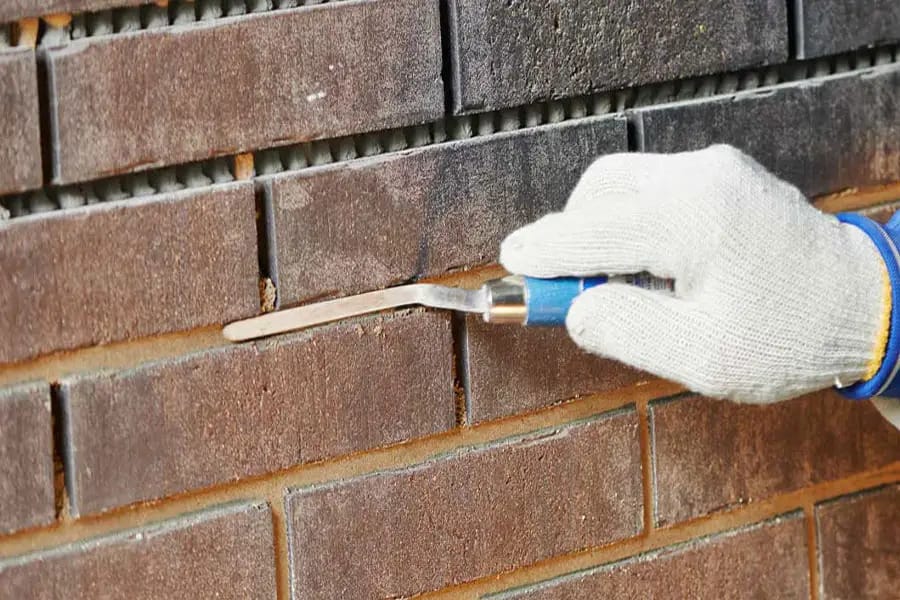
Fifth, we pack in new mortar in lifts with specialized tuckpointing tools. We compact it firmly to avoid voids behind the visible joint. Then we tool the surface to match your existing joint style, such as concave, V joint, flush, weathered, or grapevine.
Finally, once the mortar has set, we gently clean the brick faces of any smears and check the wall line by line. If you have chosen a contrasting “tuck” line for decorative effect, we apply that after the base mortar cures so the detail is crisp and durable.
Matching Mortar Color, Texture, and Strength
One of the easiest ways to spot bad tuckpointing is mismatched mortar. Odd colored patches can make an otherwise beautiful St Louis brick home look pieced together. Superior Masonry St. Louis spends time getting the mix right so repairs blend in.
We start by analyzing your existing mortar. For standard modern brickwork we visually check sand color and grain size, then perform small test batches on site to see how the color dries. For historic or pre war buildings in the city, we also look at hardness. Older brick often needs a softer lime rich mortar, not a hard hardware store mix that can cause brick to crack or spall.
Our crews adjust sand blends, cement or lime content, and sometimes use mineral pigments to fine tune the color. We always view samples once they are dry, not just wet, because mortar will usually lighten a few shades as it cures.
Beyond color, joint profile and texture matter. Many South City homes have narrow, concave joints that create strong shadow lines, while some Central West End and Lafayette Square properties have flatter or grapevine joints. We shape our tooling to replicate what is already there, so repairs disappear from normal viewing distance.
We also avoid overhard mortars. A common mistake is using very strong mortar on softer historic brick, which can trap moisture in the brick and lead to face popping in winter. Our goal is for the mortar to be the sacrificial element that we can renew over time, so your brickwork stays intact.
What Affects the Cost of Tuckpointing in St Louis
Homeowners often ask why tuckpointing estimates can vary so widely. There are real factors that impact cost, and understanding them helps you compare proposals fairly.
The first major factor is access. A single story bungalow in south St Louis with open yard access is simpler than a three story multi family in the city with limited side yards and power lines. More complex access means more time on ladders or scaffolding to safely reach every joint.
Second is the depth and extent of deterioration. Light surface cracking requires less removal than deep, loose mortar that must be cut out further. If bricks are loose, shifting, or severely spalled, some rebuilding or brick replacement may be needed before or along with tuckpointing.
Third is the type of building and brick. Historic properties often require softer, custom mixed mortar, extra hand work to protect delicate brick, and more precise color matching, which increases labor time. Chimneys and parapet walls are slower to work on because they are fully exposed and often require additional flashing or cap repairs.
Fourth is project size. Small spot tuckpointing on one corner of a house has a higher cost per square foot because of setup and clean up time. Full elevation tuckpointing on an entire wall or chimney is more efficient once we are set up on site.
At Superior Masonry St. Louis, we provide written estimates that break out areas of work, describe the removal depth, and specify the mortar type so you know exactly what you are paying for and can compare those details to other bids, not just the final number.
Timing, Weather, and St Louis Climate Considerations
Tuckpointing is sensitive to weather, and our local St Louis climate brings some specific timing challenges. We plan your project to give the mortar the best chance to cure properly and last.
Spring and fall are usually the ideal seasons. Temperatures tend to stay between about 40 and 80 degrees, which allows mortar to cure slowly and evenly. Humidity is often moderate, and we can avoid the most intense heat and freezing nights.
Summer work is common, but we adjust our methods. When it is hot and sunny, mortar can dry too fast on the surface and weaken internally. To prevent this, our crews may pre dampen the wall, work shaded elevations during the hottest hours, and use light misting or curing blankets where appropriate.
Winter tuckpointing is possible in St Louis, but only within certain temperature ranges and with protective measures. If overnight lows drop below freezing, we may need to tent and heat small work areas or delay certain phases. We do not rush winter work just to stay on schedule, since frozen mortar will not bond correctly and can fail within a year or two.
We also watch rain forecasts closely. Fresh joints must not be washed by direct rain in the first critical hours. When needed, we set up temporary coverings over active work areas. Our goal is straightforward: if we would not be comfortable with the same conditions on our own homes, we will reschedule or adjust.
Common Masonry Problems Tuckpointing Can Solve
Many St Louis property owners are not sure when tuckpointing is needed or if another repair would be better. Superior Masonry St. Louis helps you sort through the symptoms and choose the right solution.
If you see hairline cracks, crumbling mortar, gaps where mortar has fallen out, or sand piling up at the base of walls, you likely need repointing before more serious damage occurs. In chimneys, signs include loose brick at the top courses, gaps in the crown area, or white streaks (efflorescence) from water moving through the joints.
Water stains on interior plaster or drywall near exterior brick walls can also point to failing mortar, especially around window heads, sills, and roof intersections. In these areas, we might recommend tuckpointing paired with repair of step flashing or counter flashing so the wall sheds water as designed.
For older buildings with previous hard mortar patches, bricks may already be spalling or flaking. In such cases, we carefully remove the improper repairs, replace any damaged brick, then repoint with a more compatible mixture so future cycles of expansion and contraction do not keep destroying the brick.
If your masonry is structurally cracked or bowed, tuckpointing alone is not enough. We may suggest limited rebuilding, lintel replacement over windows or doors, or referral to a structural engineer. Our role is to be honest about what tuckpointing can fix and where it is only part of a larger solution.
Why Choose Superior Masonry St. Louis for Tuckpointing
St Louis has many contractors who can mix mortar and work a trowel, but consistent, long lasting tuckpointing requires a focus on masonry, not just general repairs. Superior Masonry St. Louis is built around brick and stone work, and tuckpointing and repointing are core services, not side work.
We bring local experience on everything from south city brick bungalows and two families, to Clayton and Ladue residences, to commercial facades in older business districts. This variety has taught us how different bricks and eras of construction behave in our climate.
We take photographs during inspection, explain which joints must be fully cut out versus surface repaired, and outline any related issues we see, such as failed caulk joints or deteriorated chimney caps. This transparency helps you make informed decisions and avoids surprises once work begins.
Our crews protect landscaping, roofs, and neighboring properties, containing dust as much as possible and cleaning up daily. When work is complete, we walk the project with you, pointing out repaired areas and explaining what type of maintenance, if any, is recommended in future years.
Choosing Superior Masonry St. Louis for tuckpointing means your brickwork is evaluated and repaired by specialists who prioritize structural integrity, water management, and authentic appearance so your building continues to look and perform as intended for decades.